
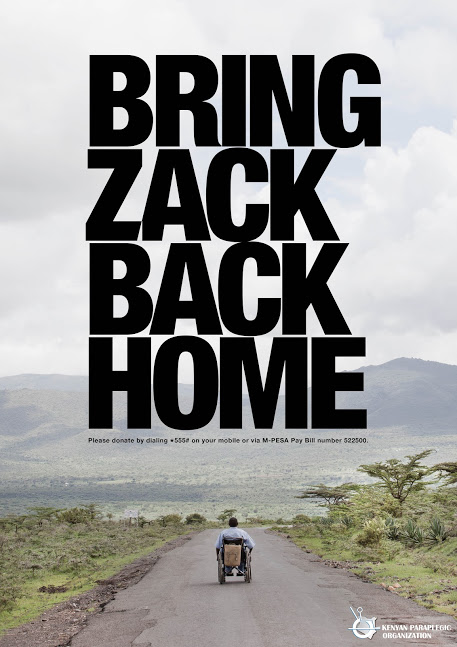
 Zack is back! According to news reports, Zachary Kimotho of the “Bring Zack Back Home” campaign is home after travelling 115 kilometers in his wheelchair; raising a whopping Sh73 million in 60 days. As the Kenya Paraplegic Organisation re-groups and plans the next phase of its campaign, here are 5 lessons I picked out from phase one:
A strong pitch – Fundraising is essentially about selling. Whether you’re asking for money to support a micro-financing project, an educational programme, or the construction of a spinal injury treatment unit (as in this case), you need to be able to persuade the donor in your sights to part with the necessary funds. For this you need a clear and convincing proposition. What is the project about? Who is it for? Why is it important? And why are you doing it now?
2) The right face – Putting a human face on your campaign gives it a stronger chance of being heard. Your ambassador doesn’t have to be a shiny celebrity. A “regular” person who can tell a story that resonates with all audiences can be just as effective. Zack, a 44-year old veterinarian who lost his wife, his job, and the use of his legs in rapid succession, offered a compelling story that quickly caught the imagination of the nation.
 1) 3) Positive partnerships – The “Bring Zack Back Home” campaign is a good example of cause marketing where both the corporation and the non-profit benefit. KPO got technical assistance and funds, while Safaricom earned profits and positive press. But an equal relationship? I don’t think so. I believe KPO missed an important opportunity to brand itself. There are a good many Kenyans who have still never heard of the Kenya Paraplegic Organisation, and who think Safaricom masterminded the campaign. I hope to hear more about KPO as the campaign continues.
4) Multi-channel approach – One of the successes of the campaign is that it uses a wide variety of media (regular and social) to reach and connect with its target audience. The hashtag #BringZackBackHome remains a top trend on Twitter. Giving has also been made easy, especially for Safaricom subscribers who have the option of letting a shilling of their airtime be deducted daily to support the cause.
5) A sense of urgency – The idea that a semi-paralysed man would have to travel 4,000 kilometres on a manual wheelchair, to get basic treatment, shocked the country. The urgency of the campaign was clear: Zack must come back; he must be treated in Kenya. Thankfully, Zack is back home, safe and sound, and KPO says he may not have to travel if the remaining Sh177 million of the required Sh. 250 million is raised. With Zack off the road, it will be interesting to see how KPO maintains the momentum of the campaign as it embarks on the next phase.
 Promote Your Cause!